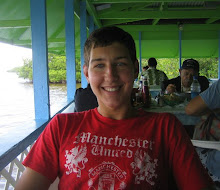
The toughest part about last weekend was getting up at 4 a.m. on a Saturday! But as a member of the Knights of Columbus, I was happy to volunteer my time. After loading up our trucks with coffee tankards and bagged breakfasts, we headed out to make our deliveries.
I was shocked at the horrific conditions in which some people live - people were sleeping under highway bridges, in alleys and on park benches. It was pretty cold outside, so they were huddled under blankets and makeshift tents, hoping to create some warmth in the middle of the night.
Despite their desperate state, the homeless were incredibly thankful for our deliveries, and many of them were happy to talk with us as we handed out meals. These people may have lost their homes, but they have not lost their dignity. If only we could do more to help!
Thursday, October 20, 2011
Wednesday, August 31, 2011
Teaching in Poland
What an amazing summer I had! A few weeks ago I returned from Poland, where I spent June/July teaching children the English language. Although it was difficult and unpredictable at times, it was definitely a worthwhile experience!
I blogged about my trip while I was there, so check out http://le-poland2011.blogspot.com/
If you want to spend your summer volunteering like I did, visit http://learningenterprises.org/
I blogged about my trip while I was there, so check out http://le-poland2011.blogspot.com/
If you want to spend your summer volunteering like I did, visit http://learningenterprises.org/

Friday, March 11, 2011
Day 7: Wheeling, WV
So today is our last day in Wheeling :(
The rain was coming down hard all day, and there were flood warnings throughout the area. Luckily, the soup kitchen was far enough from the river that we didn't have to worry about getting wet. However, many people closer to the river (and especially on Wheeling Island) needed help preparing for the flood.
Of course, I have never seen a river flood before, so I didn't really know what to expect. And when I saw the river for the first time today, I was shocked! Some of the trees and walkways on the shore were completely submerged! There was also a shack that was underwater!
I remember when we first got to Wheeling on Saturday we saw a restaurant with no windows. It looked really creepy! Now I realize that it's quite common for buildings to have no windows on the lower floors to prevent water from entering during the floods.
After crossing the bridge and getting to Wheeling Island, we started looking for people who needed help moving their washers/dryers from their basement (usually that's the only things they keep down there). We also handed out sandwiches to the people we helped. They were all really thankful, and although it was tough work, we appreciated their gratuity!
When we got back to the soup kitchen, lunch was almost halfway over, but I was still able to talk to some interesting people. I met Rosemary, who was probably about 70 years old; she had lived in the Hawaiian jungle for some time and was very cheery! I also met Burt; he was deaf and had to write down what he wanted to say in order for us to communicate, but he was also very friendly! Some volunteers actually knew sign language, so they were able to use that too.
Art stayed late again today; he played Uno with us until 4:30! By that time, I had exchanged contact information with him, and I hope to keep in touch. I also got Dal's email address.
After taking a much-needed nap, we went out for our final dinner to the Golden Chopstick. It was excellent!
What a fantastic trip this was! I will never forget the people I talked to, the friends I made, and the work that we performed. What a great way to spend my Spring Break!
The rain was coming down hard all day, and there were flood warnings throughout the area. Luckily, the soup kitchen was far enough from the river that we didn't have to worry about getting wet. However, many people closer to the river (and especially on Wheeling Island) needed help preparing for the flood.
Of course, I have never seen a river flood before, so I didn't really know what to expect. And when I saw the river for the first time today, I was shocked! Some of the trees and walkways on the shore were completely submerged! There was also a shack that was underwater!
I remember when we first got to Wheeling on Saturday we saw a restaurant with no windows. It looked really creepy! Now I realize that it's quite common for buildings to have no windows on the lower floors to prevent water from entering during the floods.
After crossing the bridge and getting to Wheeling Island, we started looking for people who needed help moving their washers/dryers from their basement (usually that's the only things they keep down there). We also handed out sandwiches to the people we helped. They were all really thankful, and although it was tough work, we appreciated their gratuity!
When we got back to the soup kitchen, lunch was almost halfway over, but I was still able to talk to some interesting people. I met Rosemary, who was probably about 70 years old; she had lived in the Hawaiian jungle for some time and was very cheery! I also met Burt; he was deaf and had to write down what he wanted to say in order for us to communicate, but he was also very friendly! Some volunteers actually knew sign language, so they were able to use that too.
Art stayed late again today; he played Uno with us until 4:30! By that time, I had exchanged contact information with him, and I hope to keep in touch. I also got Dal's email address.
After taking a much-needed nap, we went out for our final dinner to the Golden Chopstick. It was excellent!
What a fantastic trip this was! I will never forget the people I talked to, the friends I made, and the work that we performed. What a great way to spend my Spring Break!
Thursday, March 10, 2011
Day 6: Wheeling, WV
Today was another great day in Appalachia!
We did some interesting things today, to put it lightly. After serving the patrons and having our talks (I spoke with Gary, a man from Binghampton, NY...he had been to Rochester several times!), we ventured out into the West Virginian countryside.
First, we visited the former West Virginia State Penitentiary. Boy, this place was creepy. In fact, the I believe the Travel Channel filmed one episode of the series "Ghost Hunters" here. It opened in 1876 and closed in 1995. Over that time span, 94 men were executed by either hanging or electricution, with dozens others murdered by their inmates. As a inmate, this was not a place you wanted to be.
However, the tour got us thinking: how effective was this prison? And what was its purpose? Was it supposed to rehabilitate people and get them back into society or punish them eternally? With the prison system overcrowded and very expensive, many of us thought that more focus should have been given to rehabilitation. After all, don't we want to help the prisoners rebuild their lives?
After visiting the spooky prison, we traveled to the Harre Krishna Temple. What we saw there was both magnificent and questionable. All of the floors, walls and even the bathrooms were decorated with gold leaf, marble, and stain glass! But we had never previously been exposed to the beliefs and ideology of the Krishna faith, and much of what our tour guide (who himself was a priest of Krishna) said came across as incredibly odd.
Later that night, we invited a group of Church volunteers over to the soup kitchen for a pizza dinner. Many of these kids were similar to us; they were interested in volunteering and had raised money for the soup kitchen. We talked with them about baseball, video games, and other regular topics.
However, there was one kid who was different there. At first he actually seemed pretty normal, but out of the blue he mentioned that he had been at "juvy" before under false charges. He said that his mother (who was on crack) made up fake stories about him so that he would go to prison. The story seemed very odd and we didn't know how much of it to believe, but the story was shocking nevertheless.
I guess life can come at you in unexpected ways sometimes. This idea has been repeated over and over during my week here at the soup kitchen.
We did some interesting things today, to put it lightly. After serving the patrons and having our talks (I spoke with Gary, a man from Binghampton, NY...he had been to Rochester several times!), we ventured out into the West Virginian countryside.
First, we visited the former West Virginia State Penitentiary. Boy, this place was creepy. In fact, the I believe the Travel Channel filmed one episode of the series "Ghost Hunters" here. It opened in 1876 and closed in 1995. Over that time span, 94 men were executed by either hanging or electricution, with dozens others murdered by their inmates. As a inmate, this was not a place you wanted to be.
However, the tour got us thinking: how effective was this prison? And what was its purpose? Was it supposed to rehabilitate people and get them back into society or punish them eternally? With the prison system overcrowded and very expensive, many of us thought that more focus should have been given to rehabilitation. After all, don't we want to help the prisoners rebuild their lives?
After visiting the spooky prison, we traveled to the Harre Krishna Temple. What we saw there was both magnificent and questionable. All of the floors, walls and even the bathrooms were decorated with gold leaf, marble, and stain glass! But we had never previously been exposed to the beliefs and ideology of the Krishna faith, and much of what our tour guide (who himself was a priest of Krishna) said came across as incredibly odd.
Later that night, we invited a group of Church volunteers over to the soup kitchen for a pizza dinner. Many of these kids were similar to us; they were interested in volunteering and had raised money for the soup kitchen. We talked with them about baseball, video games, and other regular topics.
However, there was one kid who was different there. At first he actually seemed pretty normal, but out of the blue he mentioned that he had been at "juvy" before under false charges. He said that his mother (who was on crack) made up fake stories about him so that he would go to prison. The story seemed very odd and we didn't know how much of it to believe, but the story was shocking nevertheless.
I guess life can come at you in unexpected ways sometimes. This idea has been repeated over and over during my week here at the soup kitchen.
Wednesday, March 9, 2011
Day 5: Wheeling, WV
It's Wednesday, and we've reached the last half of our trip here in Appalachia.
Of course, it's also Ash Wednesday today, and we started off on the right foot by going to Mass at Central Catholic, a high school a few blocks down the road. The mass was beautiful (I believe the church is the seat of a bishop) and afterwards we were invited to have lunch with the upperclassmen in the cafeteria. The principal and teachers we talked to were so friendly, and we talked for a while about our service at the soup kitchen. It felt weird to be back in high school though! Sure brings back some memories...
When we got back to the soup kitchen, it was lunchtime, and I had a long conversation with Art, a regular patron. Art had some interesting stories to share with me, although I can't remember exactly what he told me; everyone I've talked to had so much to say, and many patrons came from similar backgrounds and were stuck in similar situations. Suffice to say, Art was yet another man down on his luck; he even told me that he gave away a total of $10,000 to some friends he met on the internet who promised to come and visit him. They never did. Not exactly a smart financial decision.
Our decisions define us, don't they?
I had pity for Art. He seemed like such a compassionate person, and all he wanted was some companionship. Out of all the patrons, he stayed the longest; even though the kitchen closed at 1 pm, he stayed there until 3, drinking tea and just talking and talking.
Later in the afternoon, a group of students (thankfully not me) went to do some real dirty work. I mean dirty. A woman's plumbing had stopped working, and since she didn't know how to fix it, she starting dumping her feces in her backyard. The neighbors complained and the bank was threatening to foreclose on her house. Luckily, some volunteers went to go clean up the situation, and the bank was relieved to hear that the house was back in stable condition.
Again, weird situations. Miserable, tragic situations.
Tonight during our reflections we pondered why we were in Wheeling in the first place. Why had we come to spend our spring break talking to strangers, stacking cans, and putting ourselves in uncomfortable situations when we could be resting and relaxing at home? Was it just to make ourselves look better and feel better? Some people sincerely have fun doing the service work.
But I can't say that's true. Who really thinks it's fun to be scrubbing pots and pans, cleaning up feces, and eating old, expired food? I think the reason we are really here is because the sacrifice is worth it in the end. When you get a chance to talk to people like Art, Terry, and Dal, the work becomes incredibly rewarding. It feels good when you have that face-to-face interaction with the people you are serving.
It feels really good. These people deserve it.
Of course, it's also Ash Wednesday today, and we started off on the right foot by going to Mass at Central Catholic, a high school a few blocks down the road. The mass was beautiful (I believe the church is the seat of a bishop) and afterwards we were invited to have lunch with the upperclassmen in the cafeteria. The principal and teachers we talked to were so friendly, and we talked for a while about our service at the soup kitchen. It felt weird to be back in high school though! Sure brings back some memories...
When we got back to the soup kitchen, it was lunchtime, and I had a long conversation with Art, a regular patron. Art had some interesting stories to share with me, although I can't remember exactly what he told me; everyone I've talked to had so much to say, and many patrons came from similar backgrounds and were stuck in similar situations. Suffice to say, Art was yet another man down on his luck; he even told me that he gave away a total of $10,000 to some friends he met on the internet who promised to come and visit him. They never did. Not exactly a smart financial decision.
Our decisions define us, don't they?
I had pity for Art. He seemed like such a compassionate person, and all he wanted was some companionship. Out of all the patrons, he stayed the longest; even though the kitchen closed at 1 pm, he stayed there until 3, drinking tea and just talking and talking.
Later in the afternoon, a group of students (thankfully not me) went to do some real dirty work. I mean dirty. A woman's plumbing had stopped working, and since she didn't know how to fix it, she starting dumping her feces in her backyard. The neighbors complained and the bank was threatening to foreclose on her house. Luckily, some volunteers went to go clean up the situation, and the bank was relieved to hear that the house was back in stable condition.
Again, weird situations. Miserable, tragic situations.
Tonight during our reflections we pondered why we were in Wheeling in the first place. Why had we come to spend our spring break talking to strangers, stacking cans, and putting ourselves in uncomfortable situations when we could be resting and relaxing at home? Was it just to make ourselves look better and feel better? Some people sincerely have fun doing the service work.
But I can't say that's true. Who really thinks it's fun to be scrubbing pots and pans, cleaning up feces, and eating old, expired food? I think the reason we are really here is because the sacrifice is worth it in the end. When you get a chance to talk to people like Art, Terry, and Dal, the work becomes incredibly rewarding. It feels good when you have that face-to-face interaction with the people you are serving.
It feels really good. These people deserve it.
Tuesday, March 8, 2011
Day 4: Wheeling, WV
Today was another fantastic day at Wheeling! We did some more organizing and can-stacking in the morning. It really struck me how we kept any food that was less than a 1.5 years past the expiration date, so if any can said August 2009 on the bottom or later, we kept it! Quite different than home. I'm pretty careful about making sure I don't eat expired food, and if something is even just a few weeks past the date, I consider it stale and usually throw it out. It's funny how pressing circumstances can make you look at a stamped date in a completely different way.
Just like yesterday, the conversations I had during lunch had the greatest impact on me. Today I met Adam; I guess he was around 20 years old, and he was sitting in the far corner of the eating area. When I started talking to him, I realized we had some things in common - like we were both sports fans. But what struck me was that we were both young, and I found it easier to relate to him than some of the older patrons.
But talking with Adam was like hitting a brick wall. Here we are, sitting together, sharing a meal, yet look how different our lives have turned out so far! We're both around 20, but while I'm studying at Georgetown he's going to a soup kitchen just to get a meal! I realized just how lucky I really was. I could be in his shoes if I grew up with abusive parents or made some wrong choices in my life. Adam was also on medication that was supposed to cure his heroine addiction. What if that was me? What if I was Adam? It could have happened, our places could have been reversed, but instead I was the one sitting up high, climbing the ladder, enjoying the infinite opportunities that surround me. Why?
I was overwhelmed by these questions.
I also talked to Terry today. He seemed a little more successful than most of the people at the kitchen. He was a Wheeling native who became involved in construction after high school because it was such a lucrative field. We talked for a while about his job, but the thing he stressed the most was the importance of family. He had moved back to Wheeling after he found out his brother was sick, and had stayed in Wheeling to be closer to his family. He's now eligible for retirement, but he works on little odds-and-ends just to stay busy.
As the days go on, I slowly begin to realize that the soup kitchen is not just a place where people come to eat. It's more than that - it's a place where people come to socialize. It seems that the soup kitchen provides a base for a large community of poor patrons; the people who go to eat also go to talk and hang out at the same time. Just from the few conversations I've had so far, I can alredy tell that talking is even more important than eating! For example, Terry didn't even eat his food while I talked with him; when it was time to go, most of his food was still on his plate, so he just wrapped a few biscuits in a napkin!
The power that a conversation can have is astounding.
We ended the day with a tradition called the "steak-fry" - basically the entire neighborhood brings their own meat and cooks it together on the grill. We grilled tonight with the Board of Directors, and boy were those steaks delicious! A tasty way to cap-off a great Tuesday!
Just like yesterday, the conversations I had during lunch had the greatest impact on me. Today I met Adam; I guess he was around 20 years old, and he was sitting in the far corner of the eating area. When I started talking to him, I realized we had some things in common - like we were both sports fans. But what struck me was that we were both young, and I found it easier to relate to him than some of the older patrons.
But talking with Adam was like hitting a brick wall. Here we are, sitting together, sharing a meal, yet look how different our lives have turned out so far! We're both around 20, but while I'm studying at Georgetown he's going to a soup kitchen just to get a meal! I realized just how lucky I really was. I could be in his shoes if I grew up with abusive parents or made some wrong choices in my life. Adam was also on medication that was supposed to cure his heroine addiction. What if that was me? What if I was Adam? It could have happened, our places could have been reversed, but instead I was the one sitting up high, climbing the ladder, enjoying the infinite opportunities that surround me. Why?
I was overwhelmed by these questions.
I also talked to Terry today. He seemed a little more successful than most of the people at the kitchen. He was a Wheeling native who became involved in construction after high school because it was such a lucrative field. We talked for a while about his job, but the thing he stressed the most was the importance of family. He had moved back to Wheeling after he found out his brother was sick, and had stayed in Wheeling to be closer to his family. He's now eligible for retirement, but he works on little odds-and-ends just to stay busy.
As the days go on, I slowly begin to realize that the soup kitchen is not just a place where people come to eat. It's more than that - it's a place where people come to socialize. It seems that the soup kitchen provides a base for a large community of poor patrons; the people who go to eat also go to talk and hang out at the same time. Just from the few conversations I've had so far, I can alredy tell that talking is even more important than eating! For example, Terry didn't even eat his food while I talked with him; when it was time to go, most of his food was still on his plate, so he just wrapped a few biscuits in a napkin!
The power that a conversation can have is astounding.
We ended the day with a tradition called the "steak-fry" - basically the entire neighborhood brings their own meat and cooks it together on the grill. We grilled tonight with the Board of Directors, and boy were those steaks delicious! A tasty way to cap-off a great Tuesday!
Monday, March 7, 2011
Day 3: Wheeling, WV
Our third day in Appalachia started off bright in early...we had to get up at 7:15! (I haven't waken up that early since high school haha) After eating breakfast, we got to work in the basement. The soup kitchen is funded mostly by donations, but the government also provides food; the donated food and the government food had to be separated and counted, which we started in the morning. Boy there are a lot of cans in this soup kitchen!
At about noon I went upstairs. The patrons were sitting and eating at the tables in the main room, and I wanted to grab my own lunch and join them. However, I was a little nervous. I've worked at a soup kitchen before, but I've never actually sat down with the patrons I was serving, much less have a conversation with them! These were strangers and some stereotypes came to mind: they were probably homeless, they smelled bad, had unkempt beards and baggy clothes.
But I knew these preconceived notions were wrong. These were just regular people who had fallen on hard times. Heck, we have all fallen on hard times during this recession, just to different degrees.
So I grabbed some leftover pasta, green beans, soggy shrimp, and canned soup (that was probably expired) and joined some patrons at a table.
I'm not used to eating food that's a few days old, but that was certainly not my concern at the table. Instead, I focused on the people that were sitting next to me. Surprinsingly, they were very eager to talk and were willing to share they life stories with me. One man named Dal used to live in Alaska, then moved to Florida, and then finally came up to West Virginia after a hurricane battered the coast.
Another man named Jeff had a fascinating story. He had lived in WV all his life, but it was not an easy one. After being abused by his parents at an early age, Jeff took off on his own when he was in his early 20s. He married and had two daughters, but then discovered that his wife had an adulterious affair (with her father!). Jeff decided to leave. He became depressed and turned to alcohol, which ruined his ambition and spirit.
How exactly Jeff got things turned around is unbelievable to me. He told me that he has become more spiritual, and has gotten on better terms with his separated daughters. I think he is working part-time somewhere which gets him enough money to buy an apartment, and he is starting to mend his life back together. What a turn around story! Jeff's perseverance through tough times is incredible. Although his journey is not over yet, the things he told me are having a lasting impression on how I view the working poor.
After all the patrons left, we got back to work cleaning out the two massive freezers! They were filled with meats and fish and food of all kinds! There were soooo many hams and turkeys too! I never knew a soup kitchen could have so much food. This task took up most of the rest of the day, and when we were done, we were all exhausted.
Time to go to sleep!
At about noon I went upstairs. The patrons were sitting and eating at the tables in the main room, and I wanted to grab my own lunch and join them. However, I was a little nervous. I've worked at a soup kitchen before, but I've never actually sat down with the patrons I was serving, much less have a conversation with them! These were strangers and some stereotypes came to mind: they were probably homeless, they smelled bad, had unkempt beards and baggy clothes.
But I knew these preconceived notions were wrong. These were just regular people who had fallen on hard times. Heck, we have all fallen on hard times during this recession, just to different degrees.
So I grabbed some leftover pasta, green beans, soggy shrimp, and canned soup (that was probably expired) and joined some patrons at a table.
I'm not used to eating food that's a few days old, but that was certainly not my concern at the table. Instead, I focused on the people that were sitting next to me. Surprinsingly, they were very eager to talk and were willing to share they life stories with me. One man named Dal used to live in Alaska, then moved to Florida, and then finally came up to West Virginia after a hurricane battered the coast.
Another man named Jeff had a fascinating story. He had lived in WV all his life, but it was not an easy one. After being abused by his parents at an early age, Jeff took off on his own when he was in his early 20s. He married and had two daughters, but then discovered that his wife had an adulterious affair (with her father!). Jeff decided to leave. He became depressed and turned to alcohol, which ruined his ambition and spirit.
How exactly Jeff got things turned around is unbelievable to me. He told me that he has become more spiritual, and has gotten on better terms with his separated daughters. I think he is working part-time somewhere which gets him enough money to buy an apartment, and he is starting to mend his life back together. What a turn around story! Jeff's perseverance through tough times is incredible. Although his journey is not over yet, the things he told me are having a lasting impression on how I view the working poor.
After all the patrons left, we got back to work cleaning out the two massive freezers! They were filled with meats and fish and food of all kinds! There were soooo many hams and turkeys too! I never knew a soup kitchen could have so much food. This task took up most of the rest of the day, and when we were done, we were all exhausted.
Time to go to sleep!
Sunday, March 6, 2011
Day 1 and 2: Wheeling, WV
Greetings from Appalachia! Yesterday we arrived in Wheeling, WV on the first day of our "Alternative Spring Break" trip to Appalachia. So instead of Cancun, I'm working hard here in this former mining-town that's been devastated by the exploitation of the coal mines and the economic recession. And I'm loving it!
With 10 other Georgetown (DC) students and 12 Holy Cross (MA) students, I'll be living and working at the Wheeling Soup Kitchen all week. Today we got a lot accomplished; even though the soup kitchen doesn't feed people on Sundays, we were able to clean out/reorganize the entire pantry! You should have seen how dirty and messy it was before we went to work! It took most of the afternoon, but it felt great to be able to contribute in a concrete way.
Tomorrow the week officially begins, and we'll be feeding the poor from 11am-1pm every weekday. I can't wait to serve and talk with all the people that come to the kitchen! Hopefully I'll also be learning a lot more about the history of Wheeling, the story of the coal-mining industry, and the various types of people that live in the area known as Appalchia. I wouldn't want to be spending my break any other way!
Wednesday, May 26, 2010
Baseball season in full swing

It's on every night now on ESPN and other sports channels. Baseball is America's pastime, and we are surrounded by it. When I think of baseball, images of diving catches, home-runs, and fastball pitchers come to my head.
But at Fairport Little League, different images abound, although the same game is being played. Here we see wheelchairs and walkers as children with disabilities play around the diamond. Yet, despite their condition, these children are having just as much fun!
That's because Fairport Challenger Baseball is in the middle of another successful season in 2010. Dozens of new players have joined the program this year, and many volunteers and coaches show up each week to play with the kids. As each player goes up to bat, the aura of excitement is undeniable.
I would like to extend a heartfelt thanks to all the volunteers that make this program possible. With Coach Mark Muench, winner of the Christine Welch Inspiration Award, suffering from health problems, it has been of the utmost importance to have as many helpers as possible each week. In particular, three McQuaid students - Brandon Williams, Michael Coffey, and Steve Lodico - have participated in this program for their Capstone project along with me. It has been a wonderful experience so far!
Friday, January 22, 2010
Get Well Soon Coach Mark!
It's been 7 weeks since I heard Mr. Muench got sick. They removed a tumor in his brain and he's been going through chemo and radiation ever since. I follow his blog http://markmuench.blogspot.com/ and sometimes if he doesn't post, I try not to think the worst. He's battling a terrible disease and I can only pray that he makes it.
I have been working with Mr. Muench for the past 4 years coordinating all the volunteers for the Fairport Challenger Baseball Program. This program helps mentally and physically challenged kids play baseball. He is so great with all the kids...always full of energy and positive words of encouragement. Right now he's asking for prayers and that's what I'm doing every day.
 Soon after Coach Mark had his surgery, the team got together. We did exactly what he wanted us to do; we had fun, made "get well" cards and prayed for his health. I even had the kids put together a string of prayer beads - Coach says he carries it in his pocket every day.
The kids are looking forward to our spring training, and I am too. I'm sure we'll have another great season. Of course, Coach Mark will be there, like he always has.
Mark Muench is a great man and a great role model for all of us. God Bless him! Here's the video we made for him:
Wednesday, January 20, 2010
Helping Haiti
In the aftermath of the massive 7.0-magnitude earthquake in Haiti, the world has responded with aid. Genorosity has taken many forms. At my own high school, McQuaid Jesuit, we have emptied out our pockets for the suffering Haitians. We donated over $3,000, and an anonymous donor matched our donations. In the end, $6,100 have been donated to the Jesuit Refugee Service.
Let's hope that the Haitians can find some comfort in this dismal time. As the poorest country in the Western Hemisphere, Haiti was facing problems before the earthquake even struck. It is hard to believe that such a destitute nation can be enveloped by further chaos.
It's time to pray, time to reflect on our own "misfortunes," and time to be generous.
Amazing Haiti Fundraising Effort From McQuaid Students
Let's hope that the Haitians can find some comfort in this dismal time. As the poorest country in the Western Hemisphere, Haiti was facing problems before the earthquake even struck. It is hard to believe that such a destitute nation can be enveloped by further chaos.
It's time to pray, time to reflect on our own "misfortunes," and time to be generous.
Amazing Haiti Fundraising Effort From McQuaid Students
Thursday, November 26, 2009
Marching for peace at the SOA
 “¡Presente!” This was the simple word we sung before the gates of the School of the Americas (SOA), as the names of thousands of victims were proclaimed. At the fourteenth annual Ignatian Family Teach-in for Justice last weekend, 20,000 people, including myself, gathered to promote peace around the world, especially in the war-torn countries of Latin America. The focus of our goal was to shut down the SOA at Fort Benning, Georgia, where many foreign military insurgents are trained. In particular, we remembered a certain massacre in 1989, when six Jesuit priests, their housekeeper and her daughter were murdered in El Salvador. In honoring these martyrs, we renewed our call to social justice; these dead had not died in vain.
We wanted peace through peaceful means. But is peace a tangible possibility, or is it simply an ideal? Better yet, how do we attain peace and justice? In our world, conflict may be an inherent part of the human condition, and with countries like Iran and North Korea increasing their nuclear arsenals and aggressions, peace may seem like a distant goal.
But the teach-in I attended is a grass-roots effort, and it shows that we don’t have to travel to the other side of the world to fight for justice. We can work for peace by praying, by writing to our legislators, and by simply acknowledging that a different world exists outside of our American paradise.
Despite our common desire to close the SOA for the sake of peace, I encountered many people with whom I disagreed. I listened to an attorney speak about how the redistribution of wealth was the ultimate solution, and he praised men like Che Guavara for their bold, revolutionary efforts. I was shocked when he received a standing ovation; I certainly did not want to stand. I talked to a vendor who was selling copies of Karl Marx’s Communist Manifesto, and he sincerely believed that communism was the best option for the United States. I read many pamphlets that urged people not to enlist in the Army, and I saw a sign proclaiming that 9/11 was Bush’s hoax. These encounters caused me to leave Georgia with mixed emotions.
I will protest the SOA, but that is as far as I can go. I cannot denounce the value of individual worth for the sake of absolute justice and equality. I cannot denounce the value of the American soldier; on the way home I saw a soldier at the airport, and at a time when certain peacemakers may feel ashamed, my heart swelled with pride.
But I also admit that there are some flaws in America’s ambitious foreign policy, and the injustice that has been created is indeed something that I oppose. I believe that innocent individuals should never be killed in order to advance the economic goals of imperial nations. If closing the SOA will spare lives, then I will participate in peaceful resistance.
Unfortunately, we don’t live in a perfect world, and I don’t believe that a perfect peace can ever be attained. But we can certainly try.


Thursday, August 27, 2009
Some Heavy Lifting Helps the Terminally Ill
It's not often that a high school sports team sacrifices practice time to serve the community that they play in. Yet that is what the McQuaid Volleyball team did this past Tuesday for the benefit of the Advent House. It is an activity that I have been participating in for the last four years.
The Advent House has an annual garage sale at the VFW (Veterans of Foreign Wars) Memorial in Faiport. A lot of items are donated, from sofas to skiis. But these donations are kept in a shed a few miles away from the site of the sale, and so we volunteered to load the goods on trucks, transport them to the VFW, and then finally unload them at the site.
What is the purpose of our service? Where are the profits from the sale going? The mission statement on http://www.theadventhouse.org/about_us.htm describes it best: "This is a story about the gracious love of God and those called to share that same unconditional love with people who have special needs at a critical time in their lives. Advent House is a home for two residents diagnosed to have less than three months to live. It serves all needs of its residents by affirming their dignity as a child of God and by providing all environments to fully live the last precious days of life. The love and support the Advent House ministry offers also embraces the family and friends of its residents and continues into the grieving process..."
Those who are terminally ill need both emotional and financial support during their stay at the Advent House, and hopefully our service will help them afford the necessities required to spend the last few days on earth in peace.
The Advent House has an annual garage sale at the VFW (Veterans of Foreign Wars) Memorial in Faiport. A lot of items are donated, from sofas to skiis. But these donations are kept in a shed a few miles away from the site of the sale, and so we volunteered to load the goods on trucks, transport them to the VFW, and then finally unload them at the site.
What is the purpose of our service? Where are the profits from the sale going? The mission statement on http://www.theadventhouse.org/about_us.htm describes it best: "This is a story about the gracious love of God and those called to share that same unconditional love with people who have special needs at a critical time in their lives. Advent House is a home for two residents diagnosed to have less than three months to live. It serves all needs of its residents by affirming their dignity as a child of God and by providing all environments to fully live the last precious days of life. The love and support the Advent House ministry offers also embraces the family and friends of its residents and continues into the grieving process..."
Those who are terminally ill need both emotional and financial support during their stay at the Advent House, and hopefully our service will help them afford the necessities required to spend the last few days on earth in peace.


Wednesday, August 5, 2009
A Genuine Transformation
Some young adults are living in the depths. Problems and addictions can cause them to feel like they have lost control of their lives. But I met someone yesterday who was living proof that through personal ambition, anyone can overcome the challenges that face them.
That someone was a fellow volunteer at the Open Door Mission. Together we served dinner to the some poor men and women downtown.
It all started during a conversation about school. He told me he got kicked out of high school when he was a sophomore; after noticing the large tattoo of a marijuana leaf on his forearm, I figured that he was quite the troublemaker and pot smoker as a teenager.
But I could tell that all of that changed. He had a certain humbled aura around him. During the opening prayer service, he listened intently to the preacher; even when the volunteers got up to start preparing the food, he kept on praying until the sermon was complete. He carried a small Bible by his side. He spoke to the homeless with genuine empathy and grace. He was volunteering to fulfill his court sentence, but signed up for additional hours because he felt his service gave him true spiritual strength.
Clearly, this 20 year-old man was experiencing a transformation. He is a different man now than he was six years ago.
Unless we are planning on getting kicked out of school and thrown in jail anytime soon, most of our problems are probably not as bad as his. Put his story in perspective. We can overcome anything with self-confidence and spiritual fortitude.
That someone was a fellow volunteer at the Open Door Mission. Together we served dinner to the some poor men and women downtown.
It all started during a conversation about school. He told me he got kicked out of high school when he was a sophomore; after noticing the large tattoo of a marijuana leaf on his forearm, I figured that he was quite the troublemaker and pot smoker as a teenager.
But I could tell that all of that changed. He had a certain humbled aura around him. During the opening prayer service, he listened intently to the preacher; even when the volunteers got up to start preparing the food, he kept on praying until the sermon was complete. He carried a small Bible by his side. He spoke to the homeless with genuine empathy and grace. He was volunteering to fulfill his court sentence, but signed up for additional hours because he felt his service gave him true spiritual strength.
Clearly, this 20 year-old man was experiencing a transformation. He is a different man now than he was six years ago.
Unless we are planning on getting kicked out of school and thrown in jail anytime soon, most of our problems are probably not as bad as his. Put his story in perspective. We can overcome anything with self-confidence and spiritual fortitude.
Tuesday, July 28, 2009
Fairport Challenger Baseball
About four years ago I started volunteering at Fairport Challenger Baseball. It is a program that helps mentally and physically disabled children play baseball. Ever since I started pushing kids around the bases in their wheelchairs and guiding their hands as they swing the bat, my view of people with disabilities, and of my role to help them, has changed dramatically.
 The one concept I have understood most is that every child needs and wants a friend. This is where the volunteers come in. With over forty disabled children participating in the Challenger program, it is essential that many students and family members come each Saturday to help out. It is truly a blessing to have so many eager volunteers participate, especially students from McQuaid Jesuit and Fairport High School.


 The one concept I have understood most is that every child needs and wants a friend. This is where the volunteers come in. With over forty disabled children participating in the Challenger program, it is essential that many students and family members come each Saturday to help out. It is truly a blessing to have so many eager volunteers participate, especially students from McQuaid Jesuit and Fairport High School.
We had a lot of fun this year and many great moments that we will remember – like Payton’s love of batting and trains; like Matt’s exciting cheers and pats on the back; like Daijon’s purple ring and his love affair with Michaela; like Kurtis’ home-runs and his proud rounding of the bases; like the dedication of “Challenger Field” during the last game at Fairport Little League; like the Challenger World Series at Frontier Field. And so much more…


Saturday, July 19, 2008
Urban Challenge - Reflection/Summary
My trip to Camden and Philadelphia has opened my eyes to a world which I never really payed much attention to. I live in the suburbs of Rochester, a relatively peaceful area, six long hours away. I have everything I could ever ask for, and it would be quite easy to stay inside my little paradise of Penfield and enjoy what the world offers me. Yet, I also know that there are many people less fortunate than me, and I would feel guilty if I did not take the time to explore the world of our suffering brothers and sisters. What I discovered has helped me to create a more accurate picture of our world, one in which wealth coexists with poverty, peace coexists with violence, and progress coexists with depression.
I also learned many valuable lessons.
I once thought that small acts of kindness and generosity could not make a difference. After all, will our trip to Camden really change the complexion of the city? Probably not. But Mother Teresa had this to say: "We cannot do great things, only small things with great love." I took this quote to heart, and as I traveled to the work sites, I made it my goal to make just one person feel that I truly cared about them. And I did. I made people smile, I gave them my company, I gave them food, I gave them love. And to those people it made a difference, and that was all that really mattered.
I also discovered the flaws in the attitudes of people like me who have it all. We are consumed by wasteful materialism. I want more money, not because I need it to support a striving, poor family, but because I want to buy foolish goods that I don't really need. After listening to the stories of the less fortunate, I have realized that it doesn't matter whether or not you have a big house, or an HD television, or a fancy car; what does matter is whether or not you have the basic needs of food, shelter, and love that we take for granted so often.
There is a common stereotype that the poor and unfortunate are lazy and unmotivated. Many of us believe that they are leeches to our society, as they feed off of welfare without trying to improve their lives and get a job. While such thoughts still linger in my mind, the harshness and bitterness that I previously held has disappeared. I sympathize with the poor and unfortunate after witnessing their wretched state first-hand.
This issue also challenged my political beliefs. My family is mostly conservative, yet many of the people I met were liberal, and they supported the welfare programs and reforms that are geared toward the lower classes. Part of me wants to side with the less fortunate, contradicting my conservative views.
 I will end my reflection with one last affirmation. Oscar Romero once said: "So you say you love the poor...Name them." Well, now I have responded to this challenge. I have met the sick, the poor, the lonely, the hungry, and the less fortunate. I now know their names, and I have listened to their stories. I have gained insight that has helped me open up the gates to a world that I had previously tried to ignore. But, what is more, I have realized that we cannot ignore the world of the less fortunate, because it lies in our own backyard, and thus we all have the obligation to fix it.
But fixing the world of the impoverished will not be easy. It is a journey that will require determination and considerable effort. At times like now, in which the world is filled with violence, oppression, and hate, it may seem like the final destination is unattainable. Yet, it is said that "The journey of a thousand miles begins with a single step." This week, we have bravely taken that first step.

I also learned many valuable lessons.
I once thought that small acts of kindness and generosity could not make a difference. After all, will our trip to Camden really change the complexion of the city? Probably not. But Mother Teresa had this to say: "We cannot do great things, only small things with great love." I took this quote to heart, and as I traveled to the work sites, I made it my goal to make just one person feel that I truly cared about them. And I did. I made people smile, I gave them my company, I gave them food, I gave them love. And to those people it made a difference, and that was all that really mattered.
I also discovered the flaws in the attitudes of people like me who have it all. We are consumed by wasteful materialism. I want more money, not because I need it to support a striving, poor family, but because I want to buy foolish goods that I don't really need. After listening to the stories of the less fortunate, I have realized that it doesn't matter whether or not you have a big house, or an HD television, or a fancy car; what does matter is whether or not you have the basic needs of food, shelter, and love that we take for granted so often.
There is a common stereotype that the poor and unfortunate are lazy and unmotivated. Many of us believe that they are leeches to our society, as they feed off of welfare without trying to improve their lives and get a job. While such thoughts still linger in my mind, the harshness and bitterness that I previously held has disappeared. I sympathize with the poor and unfortunate after witnessing their wretched state first-hand.
This issue also challenged my political beliefs. My family is mostly conservative, yet many of the people I met were liberal, and they supported the welfare programs and reforms that are geared toward the lower classes. Part of me wants to side with the less fortunate, contradicting my conservative views.
 I will end my reflection with one last affirmation. Oscar Romero once said: "So you say you love the poor...Name them." Well, now I have responded to this challenge. I have met the sick, the poor, the lonely, the hungry, and the less fortunate. I now know their names, and I have listened to their stories. I have gained insight that has helped me open up the gates to a world that I had previously tried to ignore. But, what is more, I have realized that we cannot ignore the world of the less fortunate, because it lies in our own backyard, and thus we all have the obligation to fix it.
But fixing the world of the impoverished will not be easy. It is a journey that will require determination and considerable effort. At times like now, in which the world is filled with violence, oppression, and hate, it may seem like the final destination is unattainable. Yet, it is said that "The journey of a thousand miles begins with a single step." This week, we have bravely taken that first step.
Friday, July 18, 2008
Urban Challenge -- DAY 5
Prior to today, the true value of a good meal has remained hidden from me. At home I don't think about where my next meal is coming from, and I am always surrounded by delicious food. But today I entered a whole new world, one in which people struggle to find food, a blessing which I so often take for granted.
This entirely different world was the St. John's Hospice in Philadelphia. While the hospice is the temporary home of 52 residents trying to escape poverty and improve their lives, it is also a soup kitchen which serves lunch to homeless people who walk in from the streets. I worked in this soup kitchen as a sort of bus boy, refilling water and taking away empty trays. In about an hour and ten minutes, I saw over 290 hungry, homeless men be fed in a small cafeteria no bigger than the size of our garage.
In addition to serving as a bus boy, I also played the piano. Although notes would have helped, I played "Claire de Lune" and hymns I found in a hymnal for about 15 minutes. At one point, a homeless man came up to me and said that he was familiar with the tune, and he asked me to play it for him again. He really appreciated my playing and my company.
That was one thing that was evident in the personalities of the homeless - they were all very appreciative and thankful for our presence and help. One man asked to me to hold his bag for him, and he kept saying to me, "God Bless you son, thank you, thank you" with sincere gratitude.
One man whose spirit was especially uplifting was a worker who helped out in the soup kitchen. He had a Carolina Panthers cap on and long dread locks. The first time I encountered him was when I started playing the piano. I told him that I didn't have my notes with me, but he responded by saying something like, "it doesn't matter what you play or how good you play it...it doesn't matter what we think of it, as long as you know that God is listening, and God will always like it." He seemed to be very religious, as he spoke of God very frequently. Later, when a homeless man played hymns on the piano, this worker would sing and praise the Lord from the bottom of his heart. Soon a group had gathered around to join in the praise.
This was probably one of the most memorable and inspirational moments of my trip. I found it unbelievable that such poverty-stricken men, victims of hard times and bad luck, were still able to retain their faith in God. These people can look at their problems and their miserable situation and they can turn their backs on God, blaming Him for their poverty. But instead, their faith grows stronger, because they realize that they need God in order to survive and because they know that giving up on God would mean giving up any hope for progress or improvement. Immense courage is required for standing up against the challenges of poverty, and such courage was found in these admirable, faith-filled men.
After serving the homeless of Philadelphia with food and with companionship, we returned back to the Romero Center for one last reflection. Shades were closed, candles were lit, and we received wooden crosses.
For dinner we had a barbecue with young parishioners from St. Joesph's Church, located right next to the Romero Center. Afterwards, I talked for a long time with Tyler Hall, a senior at Loyola Blakefield whose service, ambitions, and leadership was very commendable.
As the day began to draw to a close, I met an eight year old boy named Nathan who belonged to St. Joseph's Church. He was a big Phillies, Eagles, and Flyers fan just like me. We played catch for a while, and he told me about his family and his adventures. Although he had two sisters, he said he had no brother, and I felt like my presence and my intent listening to his long stories helped to create a sense of brotherhood between us.
 Our week of service has ended. As I go to bed with a roof over my head, I think of all those homeless men and where they are sleeping tonight.
Tomorrow we drive back home to share our stories and to reveal this world of poverty that is too often sheltered from our eyes.
This entirely different world was the St. John's Hospice in Philadelphia. While the hospice is the temporary home of 52 residents trying to escape poverty and improve their lives, it is also a soup kitchen which serves lunch to homeless people who walk in from the streets. I worked in this soup kitchen as a sort of bus boy, refilling water and taking away empty trays. In about an hour and ten minutes, I saw over 290 hungry, homeless men be fed in a small cafeteria no bigger than the size of our garage.
In addition to serving as a bus boy, I also played the piano. Although notes would have helped, I played "Claire de Lune" and hymns I found in a hymnal for about 15 minutes. At one point, a homeless man came up to me and said that he was familiar with the tune, and he asked me to play it for him again. He really appreciated my playing and my company.
That was one thing that was evident in the personalities of the homeless - they were all very appreciative and thankful for our presence and help. One man asked to me to hold his bag for him, and he kept saying to me, "God Bless you son, thank you, thank you" with sincere gratitude.
One man whose spirit was especially uplifting was a worker who helped out in the soup kitchen. He had a Carolina Panthers cap on and long dread locks. The first time I encountered him was when I started playing the piano. I told him that I didn't have my notes with me, but he responded by saying something like, "it doesn't matter what you play or how good you play it...it doesn't matter what we think of it, as long as you know that God is listening, and God will always like it." He seemed to be very religious, as he spoke of God very frequently. Later, when a homeless man played hymns on the piano, this worker would sing and praise the Lord from the bottom of his heart. Soon a group had gathered around to join in the praise.
This was probably one of the most memorable and inspirational moments of my trip. I found it unbelievable that such poverty-stricken men, victims of hard times and bad luck, were still able to retain their faith in God. These people can look at their problems and their miserable situation and they can turn their backs on God, blaming Him for their poverty. But instead, their faith grows stronger, because they realize that they need God in order to survive and because they know that giving up on God would mean giving up any hope for progress or improvement. Immense courage is required for standing up against the challenges of poverty, and such courage was found in these admirable, faith-filled men.
After serving the homeless of Philadelphia with food and with companionship, we returned back to the Romero Center for one last reflection. Shades were closed, candles were lit, and we received wooden crosses.
For dinner we had a barbecue with young parishioners from St. Joesph's Church, located right next to the Romero Center. Afterwards, I talked for a long time with Tyler Hall, a senior at Loyola Blakefield whose service, ambitions, and leadership was very commendable.
As the day began to draw to a close, I met an eight year old boy named Nathan who belonged to St. Joseph's Church. He was a big Phillies, Eagles, and Flyers fan just like me. We played catch for a while, and he told me about his family and his adventures. Although he had two sisters, he said he had no brother, and I felt like my presence and my intent listening to his long stories helped to create a sense of brotherhood between us.
 Our week of service has ended. As I go to bed with a roof over my head, I think of all those homeless men and where they are sleeping tonight.
Tomorrow we drive back home to share our stories and to reveal this world of poverty that is too often sheltered from our eyes.
Thursday, July 17, 2008
Urban Challenge -- DAY 4
Getting up at 7am, washing up, eating a quick breakfast, and preparing lunch has now become pretty routine. Our ride to the Inglis House, however, took almost an hour, as we got trapped in some heavy Philly traffic.
The Inglis House is a center for people who are confined to wheelchairs, and for patients who are in rehab in wheelchairs. The first activity we participated in was a "Spice" group discussion about the 80's. We helped transport the residents to the activity.
 "Papa" also is a firm believer in Christ, and he tries to spread the message of God to his children throughout Camden and Philadelphia. Mr. Felton is saving the community one child at a time.
The Inglis House is a center for people who are confined to wheelchairs, and for patients who are in rehab in wheelchairs. The first activity we participated in was a "Spice" group discussion about the 80's. We helped transport the residents to the activity.
During the day we also handed out mail and had conversations with the residents. Apparently, one man had been named "Father of the Year" by some organization; I thought to myself, why would such a great father and family member be sent to live in a nursing home? I found it ironic that this great father would be sent away from his own home where he was so appreciated.
Another thing that I found sad was all the memories that the residents recalled during the "Spice" game. They said things like, "oh, I used to work there" and "I remember that movie" as they talked about the good times they shared before they were handicapped.
One interesting character that we encountered was Ramona. She had a bad temper and was constantly swearing. Although it was apparent that others were tired of her, we found it quite comical, and Ramona enjoyed to see us smile in her company.
When we left the Inglis House and arrived back at the Romero Center, we quickly departed again for Philadelphia. Instead of going to the nice stores and restaurants on South Street, we went to a thrift store owned by Mr. Felton. Mr. Felton led is into a small makeshift chapel in the back of his store which served as our meeting place. He told us his story; he was a Vietnam War Veteran, a preacher, a gardener, and most importantly, a shepherd to the many children who roam the streets. Mr. Felton acts as a sort of foster parent, giving food, shelter, and clothing to any child that may show up at his door. He also herds children in from the streets; one time he saw a cold, shivering girl waiting outside a store, and it just so happened that her mother was doing business with the drug lord inside. Mr. Felton, or "Papa" as the the kids call him, took her to his home. He has saved many children from the dangers of drugs and poverty.
 "Papa" also is a firm believer in Christ, and he tries to spread the message of God to his children throughout Camden and Philadelphia. Mr. Felton is saving the community one child at a time.
Mr. Felton is truly an inspiration to me. He is not afraid to stand up for what he believes is right, even if that means putting his life in danger. He has been stabbed, and shot, and his weak heart condition makes him especially vulnerable. I can only hope and pray for his safety and security, as he continues to reach out to the youth. I think his vitality and success has partly been sustained by his optimistic, comic personality, which has triggered his unrelenting love.
When we got back to the Romero Center, we had a great Spanish meal for dinner: honey crusted chicken with olives/egg potato salad and Spanish rice. But the meal had its price - we washed, scrubbed, and cleaned all the dishes for an hour afterwards.
Another great speaker followed dinner. He was a worker at the local soup kitchen who gave up his career to work with the homeless on the street. Tomorrow, I will have the opportunity to follow his path, as I travel to St. John's Hospice, another soup kitchen. This entire week I have encountered the sick, the disabled, and the old, but Camden is known for its poverty, and I will finally get a chance to meet those people who are perhaps the most unfortunate of all - those who live on the streets. On top of being homeless, they also lack support; many are not loved or respected, but by simply serving them a hot meal, I can help them restore their dignity.
Wednesday, July 16, 2008
Urban Challenge -- DAY 3
Today for service I ventured to a garden in Waterfront South, a certain district of Camden. The garden was shared and worked by the local residents in the community, and it was directed by the Heart of Camden (a service group that also refurbishes vacant and run-down houses). The garden had vegetables, a greenhouse (which was mostly empty), a bike which, when pedaled, pumped rain water through a hose, and hundreds of flowers that were donated by a nursery and which we arranged when we first arrived. A skinny cat also snooped around.

For the majority of the day we pulled weeds - kneeling in the soft dirt with our backs against the scorching sun. I found it difficult to imagine the impact that this small, not very well maintained garden could have on the Waterfront South community. I'm sure that not everyone relishes the idea of spending time in a garden; after all, the neighbors are city people, and many hours of sweat and labor must be sacrificed, time that could be spent working or at home taking care of the family.
But I also think that just as Abigail Center offers solace to its residents, the garden serves as a source of nourishment to its neighbors. Not only does it provide physical nourishment through its vegetables, it also is a haven for people who want to get away from the stress and strain of the bustling city life. Although it may seem like difficult, dirty, and unpleasant work for us, others many be comforted by the green paradise. A thriving garden is found in a neighborhood dominated by bricks and pavement.
After we finished working, we went to a lemonade stand situated across the street from the garden. The girls who were serving us also had a small dog with them. I found this odd because I always figured that people in poor, urban cities did not have either the time or the money to have any pet, especially a dog.
The other things that struck me was that the girls were separated from their house by rails which surrounded the porch. I had noticed such structures before on other houses in Camden. The thick bars made the house look almost like a prison, and I began to sympathize with the children who seemed to live, trapped, behind the rails. In fact, having this lemonade stand was probably one of the few times that they would be allowed outside.
Yet, I also realized that these girls are lucky; they have a family, a home, and a dog, and they probably saw the iron rails as protection rather than confinement. I guess the standards by which we live differ greatly.
Later this afternoon we traveled into Philadelphia. We spent some time browsing in the shops on South Street. For dinner we ate at Jim's Steaks, famous for its cheese steak sandwiches, so famous that the likes of Kobe Bryant have eaten there. I had a steak sandwich with cheese, onions, peppers, and pizza sauce. It was great!
More card games and another shower tonight. I've got to go and get some sleep.
For the majority of the day we pulled weeds - kneeling in the soft dirt with our backs against the scorching sun. I found it difficult to imagine the impact that this small, not very well maintained garden could have on the Waterfront South community. I'm sure that not everyone relishes the idea of spending time in a garden; after all, the neighbors are city people, and many hours of sweat and labor must be sacrificed, time that could be spent working or at home taking care of the family.
But I also think that just as Abigail Center offers solace to its residents, the garden serves as a source of nourishment to its neighbors. Not only does it provide physical nourishment through its vegetables, it also is a haven for people who want to get away from the stress and strain of the bustling city life. Although it may seem like difficult, dirty, and unpleasant work for us, others many be comforted by the green paradise. A thriving garden is found in a neighborhood dominated by bricks and pavement.
After we finished working, we went to a lemonade stand situated across the street from the garden. The girls who were serving us also had a small dog with them. I found this odd because I always figured that people in poor, urban cities did not have either the time or the money to have any pet, especially a dog.
The other things that struck me was that the girls were separated from their house by rails which surrounded the porch. I had noticed such structures before on other houses in Camden. The thick bars made the house look almost like a prison, and I began to sympathize with the children who seemed to live, trapped, behind the rails. In fact, having this lemonade stand was probably one of the few times that they would be allowed outside.
Yet, I also realized that these girls are lucky; they have a family, a home, and a dog, and they probably saw the iron rails as protection rather than confinement. I guess the standards by which we live differ greatly.
Later this afternoon we traveled into Philadelphia. We spent some time browsing in the shops on South Street. For dinner we ate at Jim's Steaks, famous for its cheese steak sandwiches, so famous that the likes of Kobe Bryant have eaten there. I had a steak sandwich with cheese, onions, peppers, and pizza sauce. It was great!
More card games and another shower tonight. I've got to go and get some sleep.
Tuesday, July 15, 2008
Urban Challenge -- DAY 2
Today I woke up at 7am. As I walked down the stairs I dreadfully remembered that today we were to live off of the food that we purchased with our welfare cash. For breakfast, I improvised a shoddy meal of peanut butter and jelly sandwiches and water. As I looked further into the day, I realized that our diet lacked the protein, vitamins, and other minerals that are essential for good health. Thousands of mothers in Camden deal with this problem every day, and I began to sympathize with this harsh but true situation. Such dietary problems exist all around the world, as over 30,000 men, women, and children die from food-related illnesses each day.
With a no longer empty, and, therefore, satisfied stomach, we proceeded to the Abigail nursing home just a short drive away. This center cares for a wide variety of patients, including those who are mentally or physically disabled. Both fulltime residents and short-term rehab patients stay at the center.
The first person we met at Abigail's was Sam, a very outgoing and independent resident. He had lost control of his right hand and his speaking abilities were impaired as a result of an accident (?) a few years ago. However, his determination and will to continue a relatively normal and productive life were incredibly inspiring; he wanted to live with purpose rather than remain stagnant. A particular accomplishment of which he was very proud of was a bird house he had made out of yarn for his sister Robin.
The second person we met was Jesse, a former pastor who had recently turned 89 years old. Playing the piano was his passion, and throughout the morning he played many hymns and songs for us. He got especially emotional when he played a certain hymn without the notes, purely by memory. When he had finished, he started crying. It was at this time that he recalled a meaningful childhood story. He told us that when he had learned to play the piano, he had asked God that if he was to one day lose his sight, he wished that he could still be able to play the piano. Thus, when he closed his eyes and successfully played a hymn by heart, he was witnessing the manifestation of God's answer to his prayers long ago.
Later that morning we served coffee and tea in the dining room. I got lucky because Sports Center was on TV, and I was able to see the highlights of Home Run Derby which on was the previous night. But I also noticed a man named Fergie and his girlfriend talking at the table. The lady had recently lost her husband, and because her memory was impaired, she thought that Fergie was her spouse. I soon found out that Fergie was already arranging a mock wedding for the future. This was indeed an interesting story.
At lunchtime we served meals to those residents who remained in their rooms. I had an awkward moment when an elderly man asked me to put on his shoe which had fallen off. It was a difficult task, as the foot would not fit in the shoe. Yet at the same time I sympathized with the man, who was confined to a wheelchair, and I realized that this one small act of charity could greatly help him in his current state of helplessness.
In the dining room I also spent some time playing the game Trouble with two residents. They greatly enjoyed our company, and they enjoyed listening to our stories.
As we left the Abigail center, the thing that struck me the most was the purpose that the center served its residents. Amidst the the violence and danger of the surrounding areas, here was a haven for many individuals, privileged by the standards of Camden. While I never would want to end up in a nursing home, I understand that people like Jessie, Fergie, and Sam have backgrounds that are very different than mine, and the Abigail Center may just be the solace that such people are seeking.
After we arrived back at the Romero Center, we listened to two different guest presentations: first, a sister from Ukraine (Eastern Rite, like me) talked about communism and injustice; then we listened to the founder of a local soup kitchen and his son (both had Jesuit backgrounds) talk about the importance and role of Christian service. It's just the inspiration I need as I prepare myself to tackle tomorrow's challenges.
Boy, this day's journal entry took a long time to write. By now I am a little hungry, but not starving, and I take pleasure in knowing that I have survived another day in Camden, one of the most dangerous cities in America!
With a no longer empty, and, therefore, satisfied stomach, we proceeded to the Abigail nursing home just a short drive away. This center cares for a wide variety of patients, including those who are mentally or physically disabled. Both fulltime residents and short-term rehab patients stay at the center.
The first person we met at Abigail's was Sam, a very outgoing and independent resident. He had lost control of his right hand and his speaking abilities were impaired as a result of an accident (?) a few years ago. However, his determination and will to continue a relatively normal and productive life were incredibly inspiring; he wanted to live with purpose rather than remain stagnant. A particular accomplishment of which he was very proud of was a bird house he had made out of yarn for his sister Robin.
The second person we met was Jesse, a former pastor who had recently turned 89 years old. Playing the piano was his passion, and throughout the morning he played many hymns and songs for us. He got especially emotional when he played a certain hymn without the notes, purely by memory. When he had finished, he started crying. It was at this time that he recalled a meaningful childhood story. He told us that when he had learned to play the piano, he had asked God that if he was to one day lose his sight, he wished that he could still be able to play the piano. Thus, when he closed his eyes and successfully played a hymn by heart, he was witnessing the manifestation of God's answer to his prayers long ago.
Later that morning we served coffee and tea in the dining room. I got lucky because Sports Center was on TV, and I was able to see the highlights of Home Run Derby which on was the previous night. But I also noticed a man named Fergie and his girlfriend talking at the table. The lady had recently lost her husband, and because her memory was impaired, she thought that Fergie was her spouse. I soon found out that Fergie was already arranging a mock wedding for the future. This was indeed an interesting story.
At lunchtime we served meals to those residents who remained in their rooms. I had an awkward moment when an elderly man asked me to put on his shoe which had fallen off. It was a difficult task, as the foot would not fit in the shoe. Yet at the same time I sympathized with the man, who was confined to a wheelchair, and I realized that this one small act of charity could greatly help him in his current state of helplessness.
In the dining room I also spent some time playing the game Trouble with two residents. They greatly enjoyed our company, and they enjoyed listening to our stories.
As we left the Abigail center, the thing that struck me the most was the purpose that the center served its residents. Amidst the the violence and danger of the surrounding areas, here was a haven for many individuals, privileged by the standards of Camden. While I never would want to end up in a nursing home, I understand that people like Jessie, Fergie, and Sam have backgrounds that are very different than mine, and the Abigail Center may just be the solace that such people are seeking.
After we arrived back at the Romero Center, we listened to two different guest presentations: first, a sister from Ukraine (Eastern Rite, like me) talked about communism and injustice; then we listened to the founder of a local soup kitchen and his son (both had Jesuit backgrounds) talk about the importance and role of Christian service. It's just the inspiration I need as I prepare myself to tackle tomorrow's challenges.
Boy, this day's journal entry took a long time to write. By now I am a little hungry, but not starving, and I take pleasure in knowing that I have survived another day in Camden, one of the most dangerous cities in America!
Subscribe to:
Posts (Atom)